
Make Your Stand Memorable
Why an oversized branded deck chair can create a focal point at indoor exhibitions
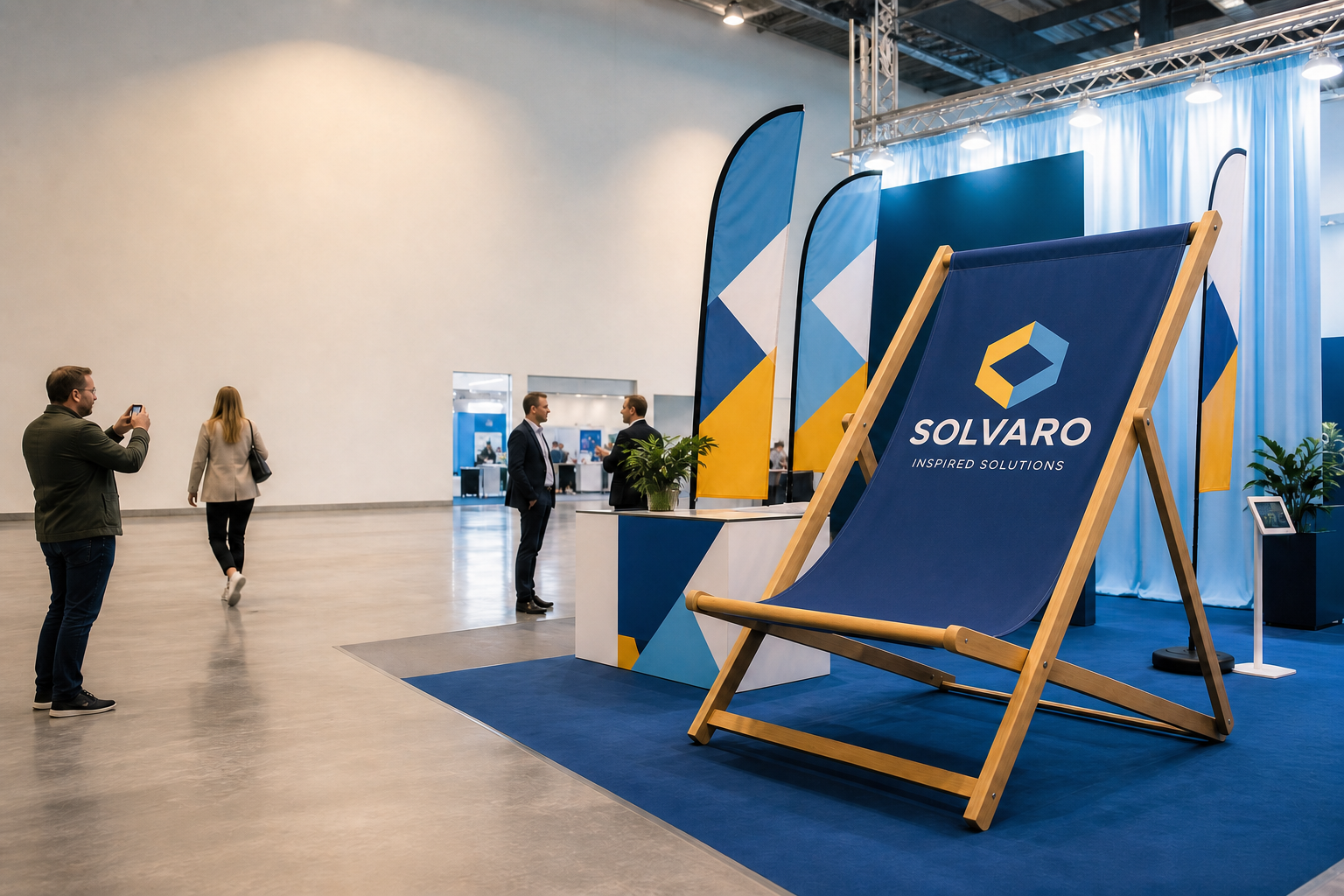
A giant deck chair can give an exhibition stand a clear visual landmark, a natural photo opportunity and a more relaxed place to start a conversation, provided the artwork, floor space and visitor flow have been properly planned.
A giant deck chair for exhibitions works because it is more than a printed graphic. It is a recognisable, three-dimensional object that can catch the eye across a busy hall, reinforce the personality of a brand and give visitors a reason to pause. It only earns its floor space, though, when it supports the rest of the stand rather than becoming an obstacle with a logo on it.
What would make someone stop halfway across an exhibition hall and reach for their phone? Often, it is not another wall of text or a screen competing with ten others. It is an unexpected object that makes immediate sense from a distance. For leisure, hospitality, travel and lifestyle brands in particular, an oversized chair can do that job well.
Custom Printed Deckchairs combine seating with brand promotion and are suitable for events and outdoor promotions. Taking the idea indoors needs a little more planning, especially around access, stand boundaries, stability and whether visitors are invited to sit, pose or simply look. The autumn exhibition season is a sensible time to review those practical points before committing to this year’s stand layout.
A giant deck chair should be a landmark, not a distraction
An oversized deck chair can stand out among shell-scheme graphics, roller banners, screens and hanging signs because visitors recognise its shape before they can read every word on it. Unlike a flat display, it has a silhouette, structure and presence from more than one direction. That makes it a useful focal point on an open stand or at the corner nearest a main aisle.
Give it a job on the stand
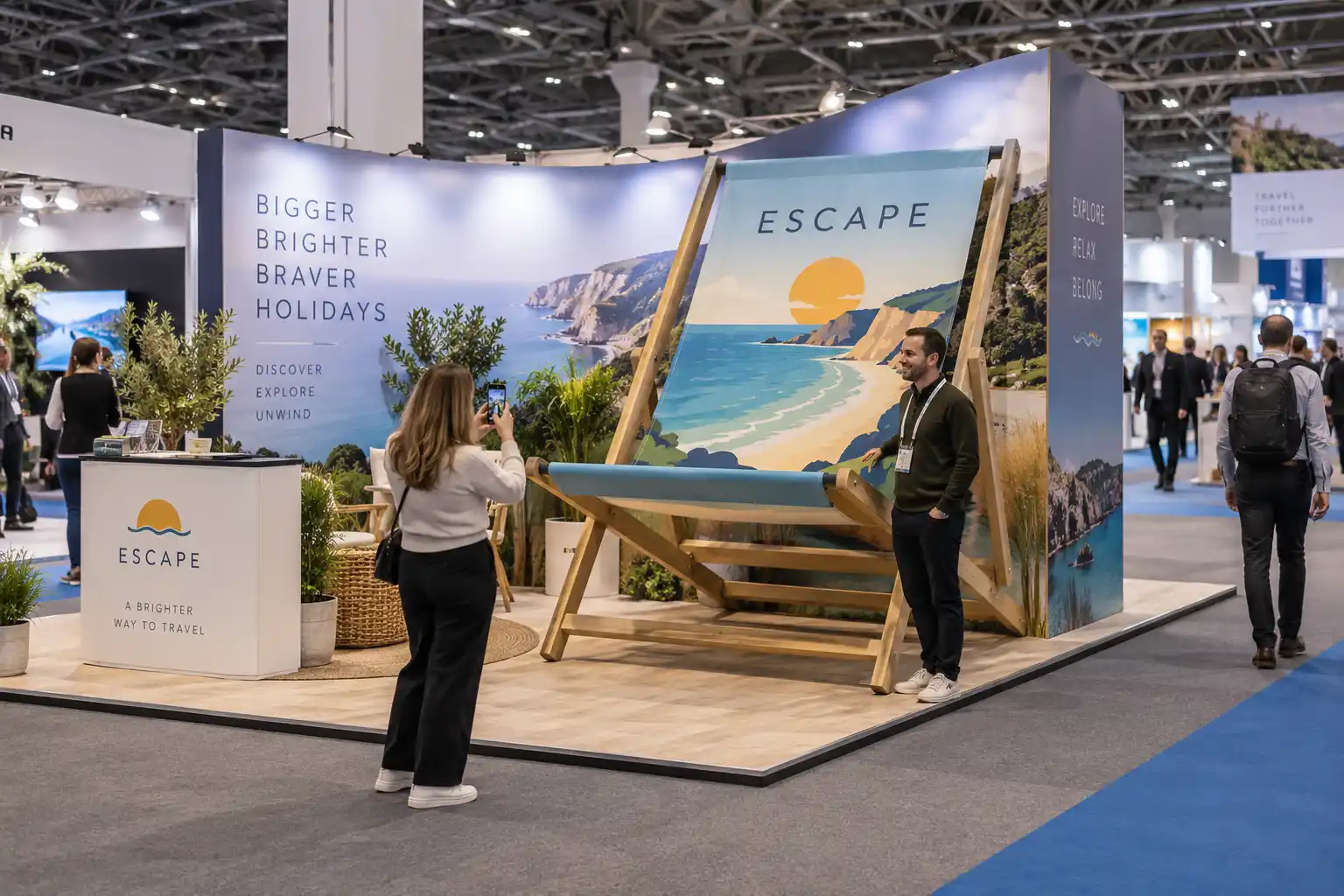
The best exhibition furniture has a clear purpose. A giant chair might reflect a relaxed brand personality, help a holiday or hospitality business set the tone, create an informal meeting point, or give a product launch a strong visual hook. It can also provide a planned photography moment, but that should be a benefit of the concept, not the entire strategy.
For example, a coastal holiday park exhibiting at a tourism show could use the chair to establish a holiday atmosphere from the aisle. A nearby wall could then show accommodation, seasonal offers and a clear enquiry route. In that setting, the chair starts the conversation; it should not be expected to communicate every detail of the holiday.
A conventional backdrop and an oversized chair do different jobs. A backdrop gives you a broad, controlled surface for a message, product image or campaign visual. A chair adds physical scale and interaction. Many stands benefit from both, with the chair drawing attention and the nearby graphic giving visitors the information they need once they have approached.
| Display approach | Best used for |
|---|---|
| Giant branded deck chair | A landmark, a sociable focal point and a possible photo moment |
| Fabric exhibition wall | A large branded background, product visuals and clear campaign messaging |
| Roller banner | Portable, focused information where floor space is limited |
If your main need is a polished background for meetings or photographs, a fabric exhibition wall may be the more practical first choice. If the stand needs an approachable feature that gives visitors something to talk about, branded furniture may justify its footprint. It is not a case of one being better than the other. It is about what you need the stand to achieve.
Keep the artwork easy to understand
Treat the chair as a large-format printed surface, not as a brochure. The brand name or logo should come first, followed by a short message if it genuinely adds something. Supporting detail belongs on a counter display, product sheet or nearby graphic where people can read it once they have stopped.
Larger lettering is not simply a design preference. It helps people understand the brand while walking past, rather than only after they are standing directly in front of the chair. Use strong contrast, uncluttered shapes and a limited number of visual elements. A busy design that looks good on a laptop can become confused when it runs over panels, folds, edges or structural sections.
Think about the chair as a set of visible zones rather than one uninterrupted canvas. The upper back is often the strongest position for a logo or campaign name. A simple pattern, block colour or enlarged part of the visual identity can work well on areas interrupted by the frame. Avoid placing essential wording where a seated visitor, a fold or the chair structure may obscure it.
- Check the main approach: View the proposed artwork from the aisle visitors are most likely to use.
- Check the side view: A corner stand is often seen from an angle before it is seen head-on.
- Plan the photographic face: Make sure the most recognisable branding is visible where people will naturally stand for pictures.
- Request a proof: Confirm logo placement, type size and colour treatment before production.
Sailflags provides a free design service for custom flags, banners and promotional displays, which is useful when adapting a brand identity to an unusual printed format. Use the free design service to ask how artwork will sit across the chair’s visible sections, and request colour-matching support where consistent brand colours are important.
Positioning decides whether visitors can enjoy it safely
A giant deck chair should be visible from a main route without blocking the route into the stand. Put it in the first place people see, but not necessarily in the first place they walk. If it sits directly across the entrance, visitors may hesitate to come in or form a queue in the aisle when someone stops for a photograph.
Use a simple floor-plan test
Before ordering, mark the chair’s full footprint on the stand plan. Then draw the likely visitor approaches, the route to your main product display or demonstration, and the place people would stand to take a photograph. This quickly reveals whether the feature guides people into the stand or creates a pinch point.
Include the space around the chair, not only its physical footprint. A display-only feature may need a clear viewing area, while a photo feature needs room for a visitor, their companion and anyone waiting nearby. If staff will invite people to sit, they also need a safe way to approach and assist without stepping into the main aisle.
For instance, on a corner stand, placing the chair slightly back from the two open edges can preserve sightlines while leaving the front clear for greetings. A reception counter or product plinth can sit to one side, so staff can speak to interested visitors without forming a queue around the chair. By contrast, placing it centrally on a small stand can split the space into awkward pockets and hide the more informative graphics behind it.
Place the chair near the strongest brand graphic, rather than directly in front of it. The two elements should work as a layered display. The chair creates the initial interest, while the wall, banner or counter tells the fuller story. Keep cables, stock boxes, bags and other trip hazards out of the visitor area.
There also needs to be a firm decision about use. Is the chair for display only? Can visitors pose beside it? Is occasional sitting permitted? Those are different operating arrangements, and the venue organiser and supplier should be able to advise on the requirements that apply. Confirm stability, supervision, visitor capacity, fire requirements and any restrictions in the exhibitor manual before finalising the layout.
Plan the practical side before the visual side is signed off
Unusual exhibition furniture still needs the same logistical planning as every other stand component. A striking product photograph does not tell you whether it will fit through the loading entrance, how it is handled, where it is stored overnight or how much room is needed around it once the stand is busy.
Ask the supplier for the finished and packed dimensions, transport arrangements, assembly process, any tools or fixing points required, and who should handle setup. Confirm whether it arrives assembled or in parts, what cleaning is appropriate during a show, and whether replacement parts or reprints are available later. Most importantly, ensure the specification matches the intended use rather than assuming a display feature is suitable for unrestricted visitor seating.
Check these details against the exhibitor manual before committing to artwork or transport. Some venues specify delivery times, loading arrangements, fire documentation or restrictions on structures that extend beyond the booked stand area. Resolving those questions early is simpler than having to redesign a layout during build-up.
Choose the chair when it supports the visitor journey
A giant chair is most useful where it fits the brand and makes the stand easier to remember. It can work particularly well for holiday and tourism organisations, cafés and hospitality businesses, leisure brands, summer-themed campaigns and organisations that want a welcoming, sociable tone. It can be less suitable for a compact technical stand where every square metre is needed for demonstrations, samples or detailed discussions.
Be honest about the space available
I often advise customers not to add a large display feature simply because it looks impressive in isolation. If your team needs room for a vehicle component, a live demonstration or private conversations, a smaller branded seating option alongside a clear backdrop may make more commercial sense. An oversized chair should improve the visitor journey, not force the rest of the stand to work around it.
For quick, portable messaging, roller banners remain a practical option. For a stronger event presence, combine a chair with restrained supporting graphics, a counter-level message and a product display. That gives visitors a reason to stop, then gives your team the tools to explain what you do.
The strongest version of this idea has a clear sequence: visitors notice the chair, understand the brand from the artwork and nearby graphics, then have an obvious place to speak to a member of the team or view the product. If that sequence is missing, the chair may still attract attention, but it will do less to support the exhibition objective.
Use this final checklist before making a decision:
- Visibility: Can people see the chair clearly from the main aisle or approach route?
- Readability: Does the logo and short message work at a walking pace?
- Movement: Is there room for photographs, conversations and safe entry to the stand?
- Logistics: Have transport, access, setup, storage and handling been confirmed?
- Brand fit: Does the chair reinforce the tone and purpose of the exhibition stand?
- Next step: Once visitors stop, can they quickly see where to find information, products or your team?
A giant custom printed deck chair can be a visible landmark, branded seating element and natural photo opportunity. Its impact comes down to readable artwork, a sensible position and a layout that gives visitors room to move. Plan it as part of the exhibition experience, not as a substitute for every other display element, and it can become the feature people remember after the hall has closed.
Planning an indoor exhibition stand? Explore Sailflags’ custom deck chair options and discuss the artwork, format and practical requirements with the team before your event.
Frequently Asked Questions
Can a giant deck chair be used at an indoor exhibition?
Yes, provided the venue and organiser approve the product, its footprint and intended use. Confirm access, stand boundaries, stability, visitor capacity and fire or safety requirements before ordering.
How should a custom printed deck chair be designed for an exhibition?
Use a clear logo, strong contrast and a short message on the most visible surfaces. Ask for artwork guidance and a proof so branding remains readable across panels, edges and structural sections.
Where should an oversized deck chair be placed on a stand?
Place it where it can be seen from a main approach route without blocking the entrance, product demonstrations or essential messaging. Allow room for photographs, queues and safe movement.
Is a giant deck chair better than a conventional exhibition backdrop?
It serves a different purpose. A backdrop provides a large information and branding surface, while a deck chair adds a three-dimensional landmark, interaction and a potential photo moment. The right choice depends on the stand objective and available space.
What should exhibitors ask before ordering branded exhibition furniture?
Ask about finished and packed dimensions, transport, assembly, handling, cleaning, replacement parts, artwork requirements and whether the product is designed for display, occasional sitting or regular visitor use.