

Teardrop flags are one of the most recognisable outdoor advertising tools on the UK high street — the tall, curved-top banners you’ll spot outside estate agents, garden centres, car dealerships and festival stalls from Cornwall to Aberdeen. If you’re weighing up whether a teardrop flag is right for your business, this guide covers everything: what they are, which size and finish to choose, where you can legally put one up, and how much you should expect to pay.
We’ve been manufacturing custom flags from our workshop in Cornwall since 1999, and teardrop flags are one of the questions we field most often from first-time buyers — usually somewhere between ‘which shape do I actually need’ and ‘will this survive a British winter’. Both are fair questions, and both are covered below.
What Is a Teardrop Flag?
A teardrop flag (also called a teardrop banner) is a single-pole outdoor flag with a distinctive curved silhouette — narrow at the top and bottom, bulging in the middle — that tapers to a point, giving it the “teardrop” shape it’s named for. The design isn’t just decorative: the curve is engineered to let wind spill off the fabric smoothly rather than catching it side-on, which is part of why teardrop flags stay more stable in blustery UK conditions than a flat rectangular banner of the same size.
Like feather flags, teardrop flags are printed on one continuous run of fabric, threaded onto a flexible fibreglass pole, and slotted into a weighted or ground-spike base. The whole thing packs down small and can be assembled in a couple of minutes without tools, which is why they’ve become the go-to choice for pop-up stalls, market traders, and businesses that need to move their signage between sites.
Teardrop Flags vs Other Flag Types
If you’re comparing your options, it helps to know how a teardrop flag differs from the other pole flags on the market:
- Teardrop flags have the fullest, most rounded silhouette of the pole-flag family — the largest visible print area for a given height, and the most wind-stable shape.
- Feather flags are narrower and more elongated, with a gentler curve — a slightly more understated look that suits estate agent boards and retail entrances.
- Banner flags are straight-edged and rectangular, closer to a traditional flag shape — a cleaner, more corporate look for brand-heavy displays.
All three use broadly the same pole-and-base hardware, so if you’re not sure which shape suits your brand, it’s worth comparing our feather flags and banner flags ranges alongside this one before you decide.
Teardrop Flag Sizes: Which Height Is Right for You?
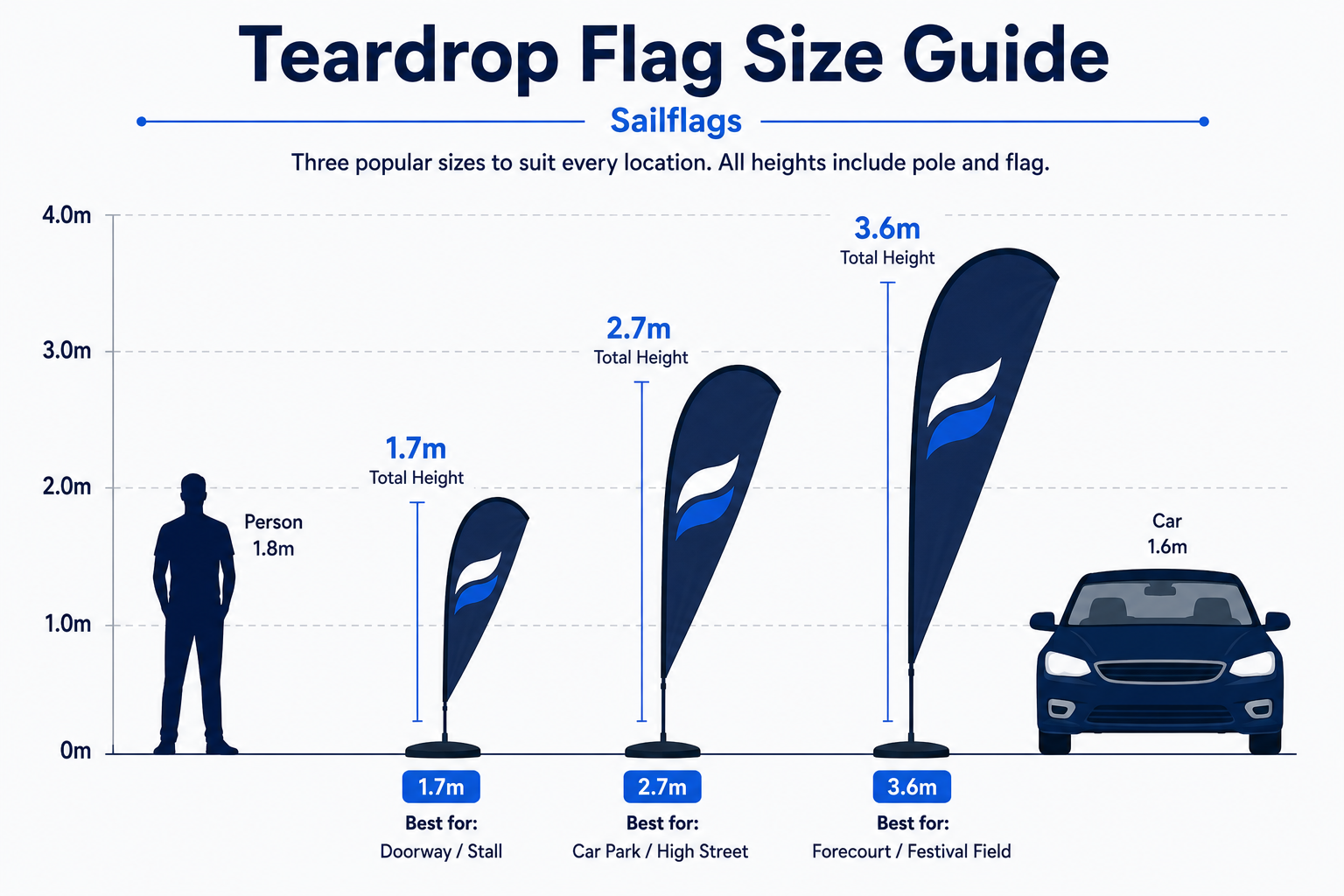
Teardrop flags are sold in a handful of standard heights, and the right one depends mostly on where you’re planting it and how far away you need it to be seen from:
- Small/compact (around 1.7m): ideal for shop doorways, market stalls, and anywhere space is tight. Easy for one person to carry and set up.
- Medium (around 2.7m): the most popular all-round size — tall enough to be seen across a car park or high street, still light enough to move between events.
- Large/long (around 3.6m): built for visibility at a distance — forecourts, festival fields, and any site where you need your flag to stand out above parked cars, market gazebos or a crowd.
As a rule of thumb: the further away your target audience will be standing, the taller the flag you need. A 1.7m flag outside a café door works perfectly; the same flag on an exhibition ground would get lost. Browse the full range of teardrop flag sizes here to compare heights side by side.
Single-Sided vs Double-Sided Teardrop Flags
Every teardrop flag comes in single-sided or double-sided print options, and the choice matters more than it might seem.
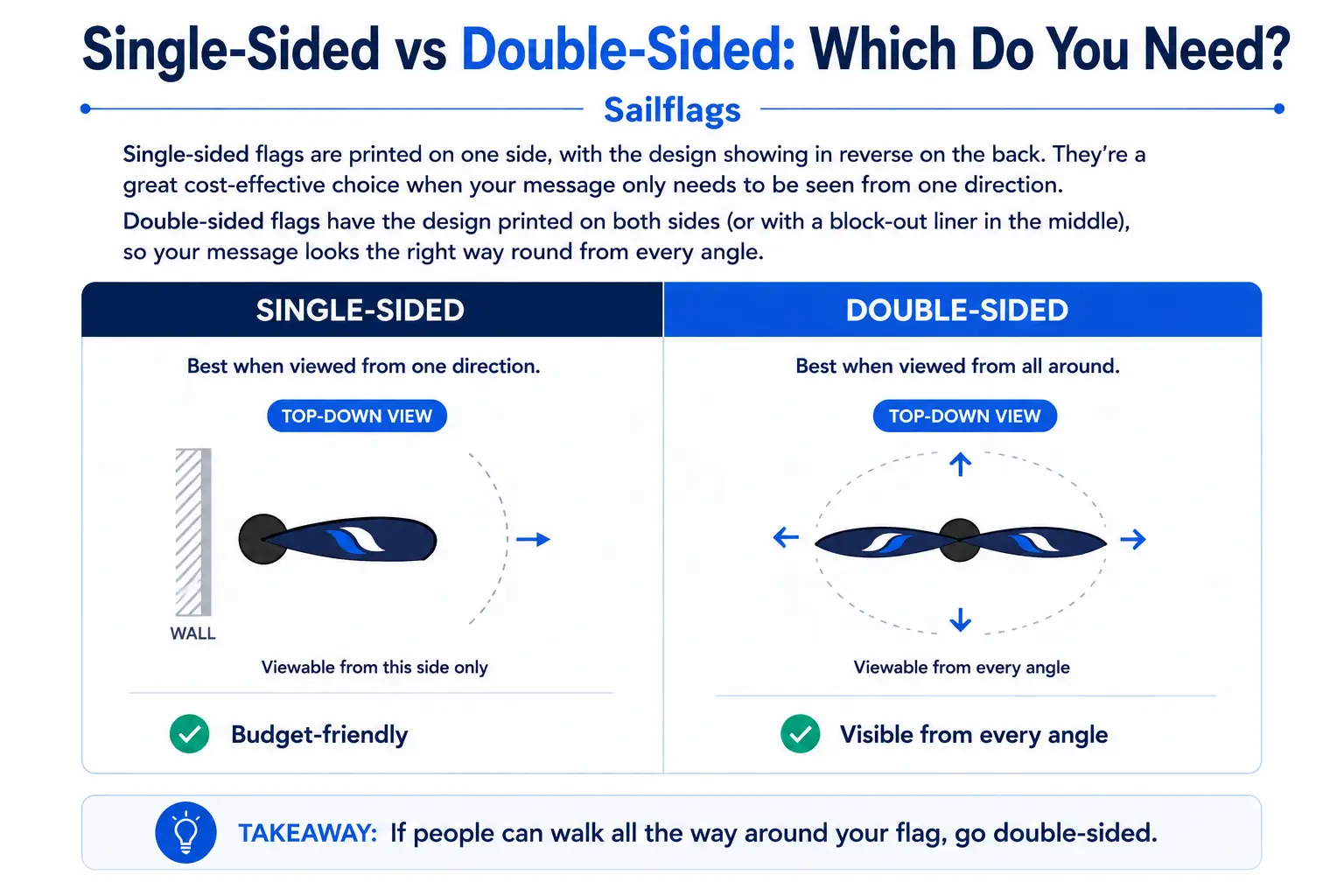
Single-sided flags are printed on one face only, with the design visible through the fabric in reverse (mirrored) on the back. They’re the more affordable option and work well when your flag will only be viewed from one direction — for example, against a wall or shopfront.
Double-sided flags are either printed twice (once on each side, both reading correctly) or built with a blackout liner between two layers of fabric so neither side shows through. They cost more but are the better choice for any flag that will be seen from multiple angles — a flag on an open forecourt, in the middle of a market, or at an event where people can walk all the way around it.
If your flag will be seen from more than one side even occasionally, double-sided is worth the extra cost — a mirrored, back-to-front logo looks unfinished and undermines the professionalism you’re trying to project.
Materials & Durability: Choosing for UK Weather
The UK’s weather is a genuine design consideration for any outdoor flag, and it’s worth choosing your fabric with that in mind rather than as an afterthought. Wind conditions vary significantly by region and by season — the Met Office’s UK wind map is a useful reference if you’re planning to display a flag somewhere particularly exposed, such as a coastal site, hilltop venue, or open car park.
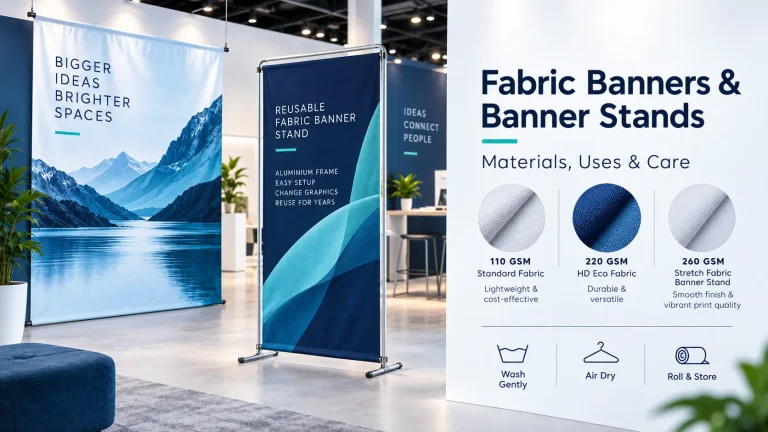
Standard polyester flag fabric is fine for most everyday use, but if your flag will be up permanently or sited somewhere exposed, look for:
- A heavier-weight, tightly woven fabric that resists flapping and fraying at the edges
- A reinforced pole sleeve with stitched (not just glued) seams
- A properly weighted or ground-anchored base rated for the flag’s height — taller flags need heavier bases, particularly in windier spots
Teardrop flags are generally considered one of the more wind-stable pole-flag shapes thanks to their curved profile, but no fabric flag is completely immune to strong gusts — in genuinely exposed, high-wind locations, it’s worth bringing flags in overnight or during forecast storms rather than leaving them staked out.
Where to Use Teardrop Flags
Teardrop flags earn their keep in almost any setting where you need to catch attention from a distance:
- Retail & hospitality: shopfronts, cafés, garden centres, and car showrooms use them to draw footfall from the street or car park
- Trade shows & exhibitions: a tall teardrop flag at a stand gives visitors a landmark to walk towards from across the hall or showground
- Outdoor events & festivals: market stalls, food trucks, and pop-up bars use them to stand out in a crowded field
- Forecourts & large sites: petrol stations, garden centres, and car dealerships use taller flags to be visible from the road
- One-off promotions: sales, launches, and seasonal offers, since teardrop flags pack down and travel easily between locations
Do You Need Permission to Display a Teardrop Flag?
This is one of the most common questions we get, and the honest answer is: it depends on where and how you’re displaying it. Under UK planning rules, most outdoor advertisements need either no consent, “deemed consent” (automatically allowed if you meet certain conditions), or formal “express consent” from your local planning authority, depending on the size, location and type of display. According to the UK government’s guidance on advertisements, flags are treated a little differently from most other signage, and many flags don’t need express consent at all — though the exact rules depend on what’s being displayed and where.
In practice, a teardrop flag on your own business premises, temporarily at a market stall, or at a private event is very unlikely to need any formal permission. Where it gets more complicated is permanent, large-scale, or roadside displays — particularly near junctions or on public land — where your local council may have a view. If you’re planning anything beyond a straightforward shopfront or stall display, it’s worth a quick check with your local planning authority before you commit; it costs nothing and avoids any awkward conversations later.
Custom Printing & Design: How to Order
Every teardrop flag we produce is printed to order, so your logo, colours, and message are reproduced exactly rather than picked from a template. If you already have brand artwork, our design team can adapt it to fit the teardrop shape correctly — because of the curved silhouette, artwork needs to be positioned carefully so your logo doesn’t end up warped or cropped near the taper.
If you don’t have print-ready artwork, our online flag creator lets you build a design from scratch or lay your logo onto a ready-made template, with a live preview so you can see exactly how it’ll look on the finished flag before you order.
Poles, Bases & Accessories
A teardrop flag is only as stable as the base it’s standing in, and choosing the right one matters more than people expect. Options include:
- Water- or sand-weighted bases — a good all-rounder for hard standing like patios, forecourts, and shop fronts
- Ground spikes — the simplest option for grass, soil, or festival fields, and usually the most wind-resistant when properly driven in
- Cross bases or wall brackets — for indoor use or fixed, permanent outdoor mounting
- Backpack kits — a flag, pole, and base built into a rucksack-style carry system, popular with market traders and mobile promoters who need to set up and pack down quickly at multiple sites in a day
See the full range of teardrop flag bases and accessories to match your base to your setting.
How Much Do Teardrop Flags Cost?
Pricing depends mainly on three things: the size of the flag, whether it’s single- or double-sided, and which base and pole kit you choose. As a general guide, smaller single-sided flags sit at the more affordable end, while larger double-sided flags with a premium weighted base cost more — but even at the top of the range, teardrop flags remain one of the most cost-effective forms of outdoor advertising per week of use, since a well-made flag will typically last multiple seasons with proper care.
Fabric weight and print complexity also factor in: a simple one- or two-colour design on standard fabric will always cost less than a full-bleed photographic print on a heavier, wind-rated material. Neither is ‘better’ outright — it depends on how long the flag needs to last and how exposed the site is. If you’re not sure which spec suits your budget and setting, it’s worth asking for a couple of options at quote stage rather than guessing.
If you’re ordering more than one flag — for multiple sites, a franchise, or an events season — ask about trade and bulk-order pricing, which brings the per-flag cost down significantly.
Caring for & Storing Your Teardrop Flag
A little care goes a long way toward extending the life of your flag:
- Bring it in during high winds or storms rather than leaving it staked out unattended
- Let it dry fully before folding and storing it — packing away a damp flag encourages mould and colour bleed
- Store it loosely rolled, not tightly folded, to avoid permanent crease lines in the fabric
- Rinse off salt spray or heavy dirt if it’s been sited somewhere coastal or dusty, and let it dry before storing
Frequently Asked Questions
How long do teardrop flags last?
With reasonable care, a well-made teardrop flag typically lasts one to several seasons of regular outdoor use, depending on fabric weight, weather exposure, and how often it’s brought in during bad weather.
Can I use the same base for different flag sizes?
Not always — taller and heavier flags need a base rated for that height, particularly in exposed or windy locations. Check the recommended base for your flag size before ordering.
Is a teardrop flag or a feather flag better for my business?
Both work well for outdoor advertising; the choice mostly comes down to look. Teardrop flags have a fuller, more rounded shape and the largest print area for their height, while feather flags have a slightly more slender profile.
Do teardrop flags come with a warranty?
Check the specific product listing for warranty details, which vary by flag range.
Ready to Order Your Teardrop Flag?
Whether you need a single flag for your shopfront or a fleet of them for a multi-site business, browse our full range of teardrop flags or get a custom quote and we’ll help you pick the right size, finish, and base for where it’s going up.